
Licensed and Insured
Connecticut HIC 0660744 with full liability and workers comp. Your framing project stays covered from foundation to roof deck.
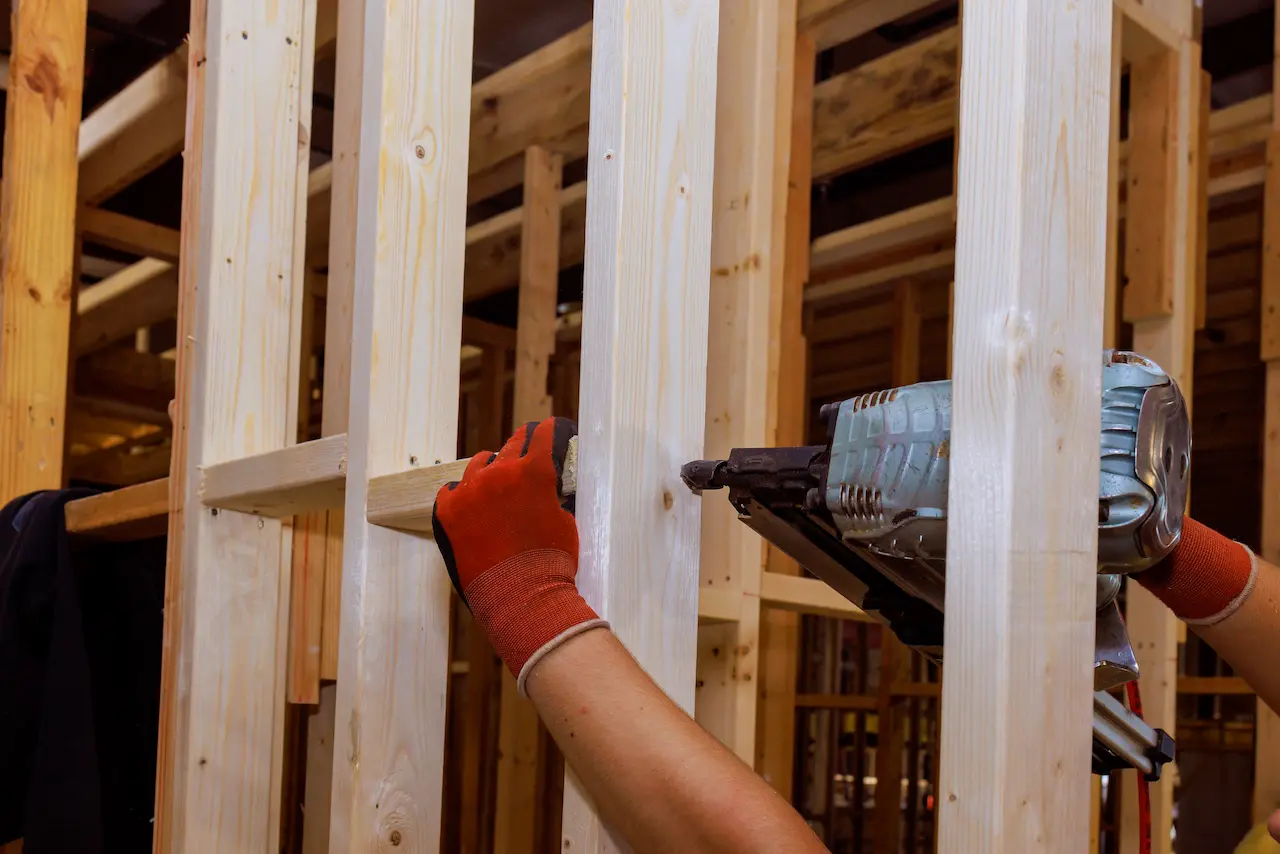
SC Home Improvement frames additions, dormers and new construction across Connecticut. Square walls, plumb studs, sized headers and engineered lumber spans built to handle CT snow loads, wind events and the inspections that follow. Licensed contractor, many years on the framing crew.
Framing is the skeleton of every home. Get it wrong and nothing else lines up. Doors stick, drywall cracks, floors squeak, the roof sags. Get it right and everything that follows goes faster, fits better and lasts longer. SC Home Improvement has been framing additions, dormers and new builds across Connecticut for 17 years, from Stamford coastal expansions to Hartford new construction in the suburbs.
Our framing crew handles rough carpentry from foundation to roof deck. We snap chalk lines on the sill plates, lay out walls code-spec on center, frame headers sized for the load above, set joists with Simpson Strong-Tie hangers, sheathe walls with OSB or plywood, and stand rafter assemblies cut to the right pitch. Every cut gets checked for square. Every wall gets checked for plumb. No moving on until what we just built passes that test.
Connecticut framing has specific demands. Snow load requirements in Hartford and inland CT towns push design loads to heavy snow loads, which means undersized rafters or improperly spaced joists fail inspection. Coastal areas like Greenwich and Fairfield enforce stricter wind-zone fastening including hurricane ties at every rafter-to-wall connection. Older home additions in Danbury and Shelton often require tying new framing into existing walls that are out of plane. We design every framing job for the specific CT conditions on your site.
Home addition framing in Connecticut starts with tying the new structure into the existing house correctly. We expose the existing wall framing, verify what is load-bearing and what is not, install proper headers where new openings will go, and frame the new section so loads transfer cleanly down to new footings. Most addition failures we see come from previous contractors who skipped this step and just bolted new walls onto whatever was there. The result is doors that never close right and walls that crack within two CT winters.
Dormer framing is one of the trickier framing jobs because it cuts into an existing roof structure. We start by shoring the affected rafters from below, cut the openings square and clean, install doubled headers and sister rafters to redistribute the loads, and frame the new dormer walls plumb to the existing roof slope. Connecticut snow load means dormer rafters often need to be larger than the existing roof rafters they tie into. We size for current code, not for what was acceptable when the original roof was framed in the 1950s.
New build framing on a full house or major addition requires engineered lumber where conventional dimensional lumber will not span the required distance. LVL beams, glulams and I-joists are now standard in Connecticut residential framing for longer spans and open floor plans. We work from the engineered drawings exactly, install hangers and connectors per the spec sheets, and verify every bearing point can carry the load it is designed for. CT inspectors check this carefully and we have never failed a frame inspection for spec deviation.
Structural framing problems rarely announce themselves until they are serious. A bouncing floor might mean undersized joists or rotted blocking. A sagging ridge might mean inadequate ridge support or rafter ties that pulled apart. A cracking wall above a window opening usually means the header is too small for the span. We inspect framing problems with a flashlight and a level, identify the actual cause, and quote the structural fix rather than just patching the symptom.
Most Connecticut framing repairs trace back to four specific issues. Joists undersized for the span they cover, common in older CT homes built before modern span tables. Headers under windows or doors that were never sized for the load above. Rafter ties that came loose or were never properly nailed, causing roof spread over decades. Sill plates and rim joists rotted from water infiltration around the foundation. We have repaired all four many times in older Hartford and Fairfield County homes.
Our framing repair process runs in four phases. First a structural inspection with measurements, photos and a clear explanation of what is failing and why. Second a written estimate that may include engineer involvement if a structural calculation is needed. Third we pull the required permit if the repair affects load-bearing elements, which most structural framing repairs do. Fourth we complete the repair using sized lumber, proper hangers and code-compliant fastener schedules, then walk you through everything before final inspection.
Framing is where most contractor shortcuts happen because most of the work gets covered by drywall, insulation and finishes within weeks. A homeowner cannot easily see if studs are code-spec on center or 24 inches, if headers are double 2x10 or single 2x8, if rafters are sized correctly for the snow load. By the time problems show up years later, the proof of bad framing is hidden behind everything else. Quality framing matters most because it is the part you will not see again.
Connecticut framing code is enforced through inspections at specific stages. Foundation inspection before slab pour. Framing inspection once walls are up and roof is on but before insulation or drywall goes in. Final inspection at completion. Stamford and Greenwich inspectors are strict on hurricane tie spacing and hold-down bolts. Hartford and Danbury inspectors check load paths and header sizes carefully. We schedule each inspection at the right point in the build and have never had a framing job rejected for not meeting CT code.
Bad framing destroys home value and creates liability. Insurance carriers can deny claims on homes with unpermitted or non-code framing. Buyers and their inspectors flag visible framing problems and walk away or demand major price cuts. Worst case, structural failure causes property damage or injury. None of these scenarios are theoretical: we have been called to fix framing on Connecticut homes where previous owners or contractors cut corners and the new owners discovered the problems too late. Frame it right the first time.
Hiring a licensed Connecticut framing contractor gets you more than just stick-built walls. Here is what professional framing actually delivers on your CT project.
Studs laid out code-spec on center with plumb walls and square corners that pass every CT inspection
Headers sized correctly for the load above so doors and windows stay square through Connecticut seasons
Joist spans calculated to current Connecticut building code with state amendments enforced by Connecticut towns
Hurricane ties and proper hold-downs on coastal Stamford and Greenwich framing per wind-zone requirements
Engineered lumber like LVL beams and I-joists where spans exceed conventional dimensional lumber limits
Rough framing tied properly into existing structures for Hartford and Danbury home additions
Permits pulled and inspections passed for foundation, framing and final stages on every CT project
Ready to get your Connecticut framing done right? Request your free written estimate today.
Request Free EstimateReal jobs we finished. Click any photo to see the full image and browse through the project gallery.
Connecticut HIC 0660744 with full liability and workers comp. Your framing project stays covered from foundation to roof deck.
Nearly two decades framing additions, dormers and new builds across Connecticut. Real experience shows up at inspection time.
Every CT project framed to current Connecticut building code with state amendments. Inspections scheduled and passed on every job we run.
Common questions Connecticut homeowners ask before booking a framing project. Still not sure? Just call us.
Framing covers wall plates, studs, headers, joists, rafters, sheathing and structural connectors. We handle layout, cutting, assembly, plumbing walls, setting roof trusses and prepping for the rough inspection that follows framing completion in Connecticut.
Framing cost varies by project type, square footage and complexity. Materials are separate from labor. Contact us for current pricing. We come to your Connecticut home or build site, measure the project and send a written quote with breakdowns.
Yes. Any framing that affects structural elements, adds square footage or changes load paths requires a Connecticut permit. Stamford, Greenwich and Hartford all require permitted framing inspections at specific stages. We pull permits as part of every framing project.
A typical home addition framing runs several weeks. A dormer takes several days. A full new build runs several weeks for framing alone. CT weather affects framing because we cannot install sheathing in rain. We give a real timeline at the estimate.
Yes. Connecticut HIC license 0660744 covers all our framing work plus full liability and workers comp insurance. We can show you the paperwork at the estimate visit before any framing work starts on your CT home or addition.
Tell us about your Connecticut framing project. We will review the plans or walk the site, identify load paths and send you a written estimate with breakdowns.